Marinja Principe Presents 2 Posters at ACM CHI 2026
Marinja Principe presents 2 Posters at ACM CHI 2026: "The Spoonful Workday: Investigating Smartwatch-Supported Energy Management and Its Reflections on Break Behavior" and "Toward a Better Buddy: A Value-Sensitive Use Case Study of an Educational AI Chatbot".
The Spoonful Workday: Investigating Smartwatch-Supported Energy Management and Its Reflections on Break Behavior
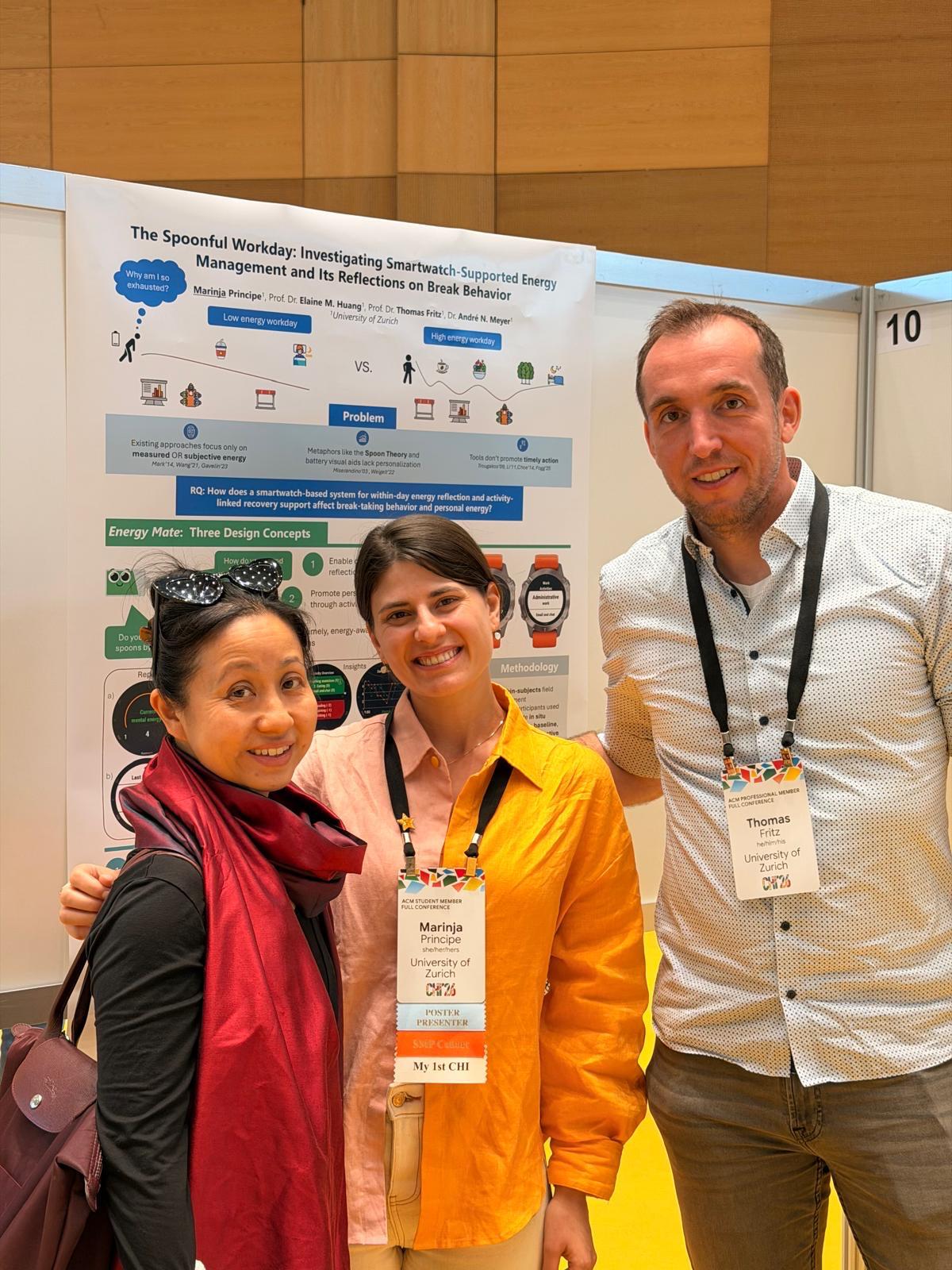
Most of us organize our workdays around time, meetings, deadlines, and task lists. But what actually determines whether we can focus, think clearly, or do meaningful work is not time, but energy. Unlike time, energy is limited, fluctuating, and deeply personal. In our recent work, “The Spoonful Workday”, we explore how people can better understand and manage their energy throughout the workday using a smartwatch-based system called Energy Mate. The goal is simple: to make energy visible and actionable in the moments when it matters most.
The Hidden Problem of Energy
Throughout the day, our activities continuously shape our energy. Meetings, deep work, social interactions, and breaks can either drain or restore it, but these effects vary widely across individuals and contexts. Despite this, most people are not aware of these patterns as they unfold.
Even though short breaks are known to improve well-being and performance, they are often postponed or skipped. Many people push through fatigue and only recover after work has ended. This creates a pattern of gradual depletion, where energy is treated as something to endure rather than something to manage.
Making Energy Visible
Energy Mate was designed to address this gap by enabling lightweight, continuous reflection. Instead of relying on end-of-day summaries or complex interfaces, the system uses quick check-ins directly on a smartwatch. These interactions take only a few seconds and can be completed even during busy moments, making it possible to notice changes in energy as they happen.

To make energy easier to interpret, the system represents it using “energy spoons,” inspired by Spoon Theory. This metaphor frames energy as a finite resource that is spent and regained through everyday activities. By linking changes in energy to what users are doing, the system helps them understand not just how much energy they have, but what is influencing it. In doing so, it shifts the perspective from energy as a loss to energy as an investment in meaningful work.
From Awareness to Action
Reflection alone is not enough to change behavior. For this reason, Energy Mate also supports action through timely, state-aware feedback. After each check-in, the system adapts to the user’s current energy level. When energy is stable, it highlights patterns and insights to support learning. When energy is low or declining, it suggests small, feasible recovery actions that can be taken immediately.
This timing is critical. Rather than offering generic advice, the system provides support at moments when users are already reflecting on their state and are more likely to act.

What Changes in Practice
We evaluated Energy Mate in a three-week field study with 20 participants, comparing a baseline condition with two intervention phases that introduced insights and suggestions. Participants engaged consistently with the system, integrating short reflections into their daily routines without it feeling disruptive.
Over time, participants began to change how they approached breaks. They reported taking breaks more intentionally and earlier, often in response to emerging fatigue rather than waiting until exhaustion. Importantly, breaks were no longer seen as a loss of productivity. Instead, they were reframed as a way to sustain performance and improve the quality of work.
These changes were not only subjective. Physiological measures of energy (e.g Garmin Body Battery) increased during the intervention phases compared to baseline, suggesting that small, well-timed interventions can meaningfully improve how people feel during the workday.
Designing for Energy, Not Just Time
The findings highlight several implications for the design of future systems. First, reflection must be lightweight and embedded into everyday routines to be sustainable. Second, personalization is essential: people need to understand how their own activities shape their energy, rather than relying on generic metrics. Third, timing matters more than information; support is most effective when delivered at the right moment.
At the same time, the study points to an important limitation. Even with better awareness and support, participants sometimes struggled to take breaks due to workload and workplace expectations. This suggests that energy management is not only an individual challenge, but also a social and organizational one.
Toward More Sustainable Workdays
Energy Mate demonstrates that managing energy during the workday is both possible and beneficial. By making energy visible, personal, and actionable, it helps people move from reactive to more intentional work patterns.
Ultimately, improving how we work is not just about optimizing time. It is about recognizing that energy is the resource that enables everything else, and learning how to use it more wisely.
Publication
Toward a Better Buddy: A Value-Sensitive Use Case Study of an Educational AI Chatbot
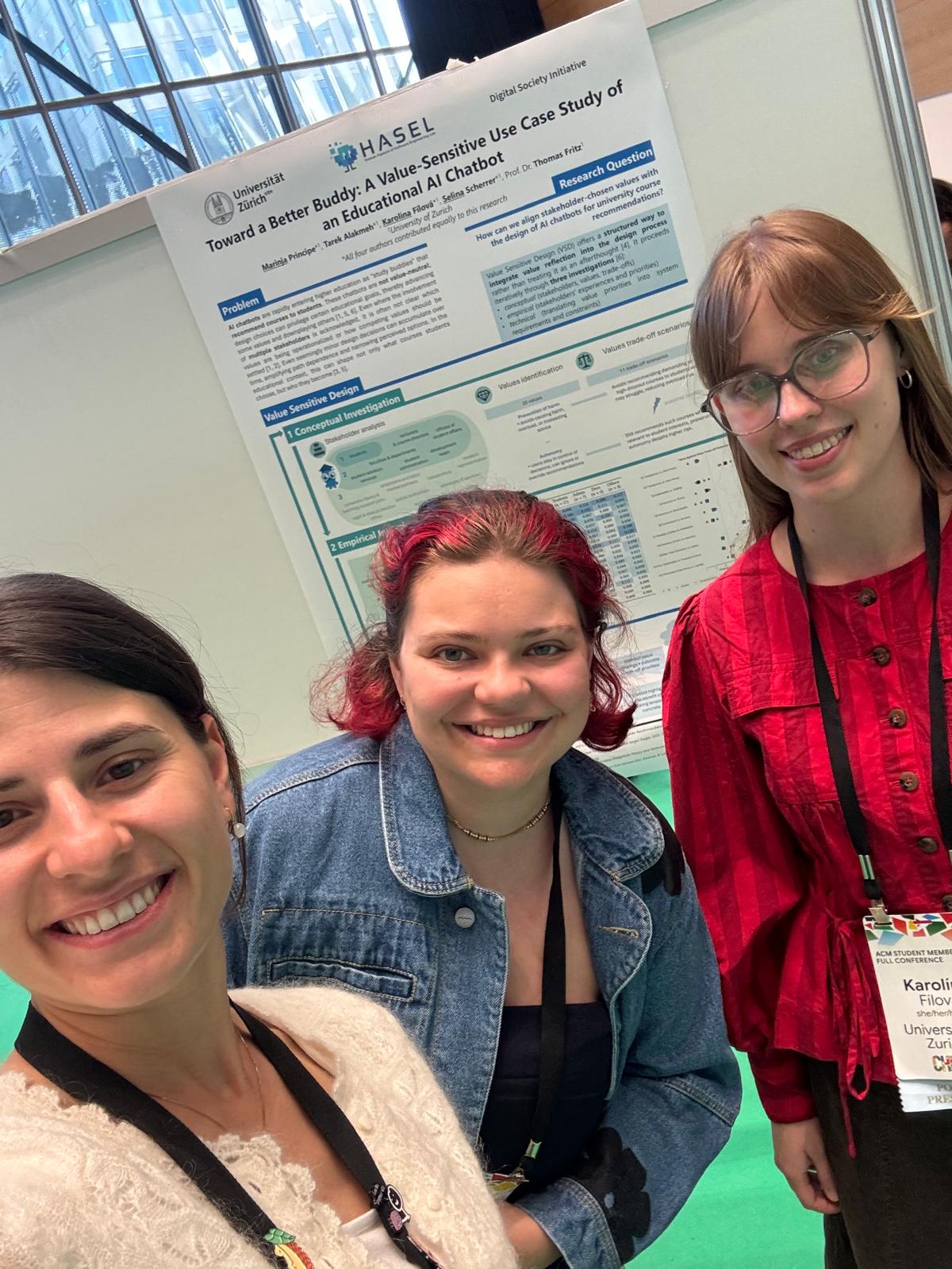
AI chatbots are rapidly becoming "study buddies" in higher education, helping students choose courses, plan degrees, and navigate university life. But behind the convenience lies a critical question: what values are these systems actually promoting?
Our recent work explores this question through a case study of a university course recommendation chatbot. Rather than treating AI as neutral, we argue that every design decision embeds values that can shape not only what students choose, but who they become.
From Features to Values
Educational decisions are inherently value-laden. A chatbot optimized for efficiency might push students toward “safe” or popular courses, while one prioritizing exploration could encourage risk-taking and personal growth. These trade-offs are not technical details, they are normative choices.
To address this, we applied Value Sensitive Design (VSD), a framework that systematically integrates human values into technology design. Our approach combined:
- A conceptual analysis of stakeholders and value conflicts
- An empirical study capturing stakeholder priorities
- A technical translation of values into system requirements
Across students, administrators, and developers, one result stood out clearly:
👉 Trust and Reliability are the top priorities.
Stakeholders want a system that, gives recommendations users can depend on, avoids harmful mistakes, clearly communicates uncertainty.
Interestingly, even when faced with difficult trade-offs (like privacy vs transparency), stakeholders showed strong alignment rather than conflict. This suggests that value-sensitive AI design is not only desirable, but feasible.
Why This Matters
Educational AI systems don’t just optimize choices, they shape trajectories. A poorly designed chatbot can subtly narrow opportunities, while a well-designed one can empower students.
By making these values explicit and designing for them systematically, we can build AI "buddies" that are not only helpful, but trustworthy, safe, and genuinely supportive of student growth.