People and Computing Lab
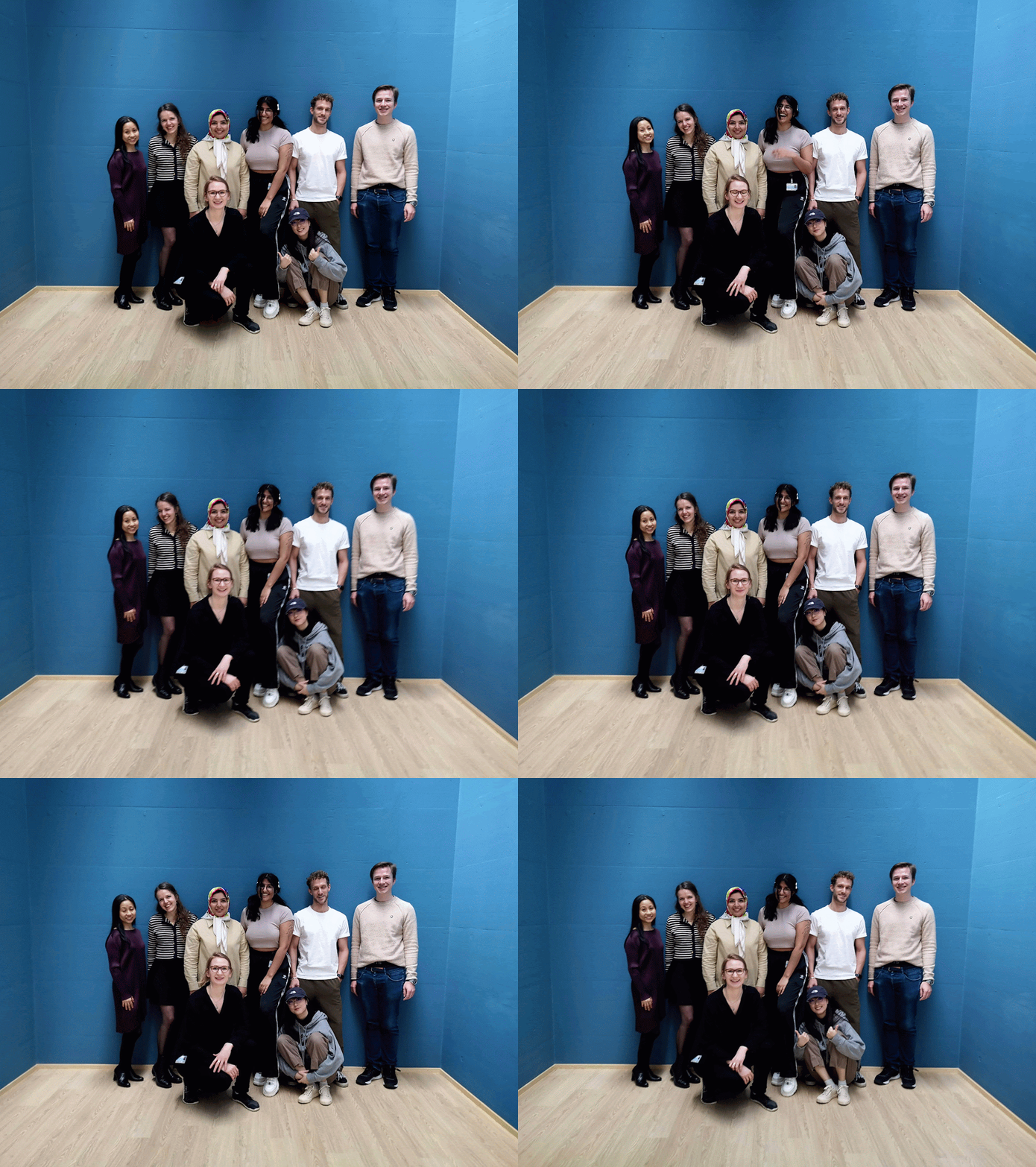
Welcome to ZPAC!

The Human-Computer Interaction group at the University of Zurich.
Mission
We strive to design great experiences with computing and create technologies that benefit people in everyday life. To do so, we take an approach to research that goes beyond interface design and usability. We focus on gaining a deep, contextualized understanding of the relationship between people and computing technologies from which to draw insight.
Research
In our research, we apply approaches drawn from a variety of fields, with a focus on qualitative methods such as interviews for data collection or affinity diagramming for data analysis. Building upon a thorough understanding of a problem space, we iteratively develop designs and systems that offer people new interactive experiences.
Currently, we are working in areas such asstorytelling for ML and AI education, digital health personalization, Social and Design Justice in the context of Gender-Based Violence sensing technologies in prenatal care and designing at the intersection of culture and mental health.
Teaching
We take a hands-on approach to learning that is reflected in our teaching. Our courses are highly interactive in nature and incorporate projects, discussion, and in-class activities to give students the opportunity to put knowledge and skills to use.
Additional Information
ZPAC News
-
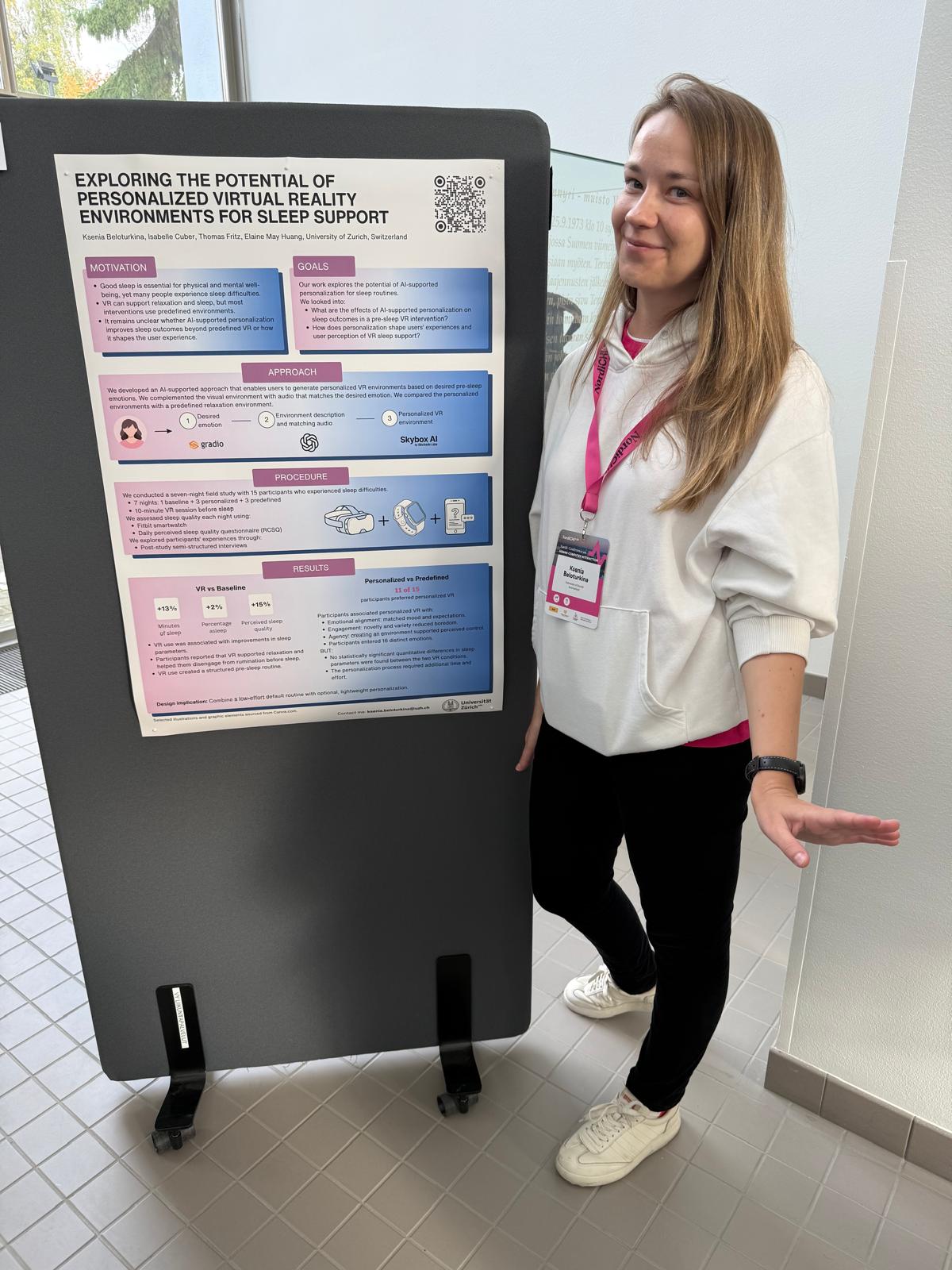
Ksenia Beloturkina Presents Poster at NordiCHI 2026
Ksenia Beloturkina presented her poster, “Exploring the Potential of Personalized Virtual Reality Environments for Sleep Support” (co-authored with Isabelle Cuber, Prof. Dr. Thomas Fritz, and Prof. Dr. Elaine M. Huang, University of Zurich), at the Nordic Conference on Human-Computer Interaction (NordiCHI 2026).
The work explores the potential of virtual reality (VR) to improve sleep, focusing on how personalized virtual environments could create more relaxing and supportive pre-sleep experiences, contributing to the discussion of how immersive technologies might support sleep and well-being.
-
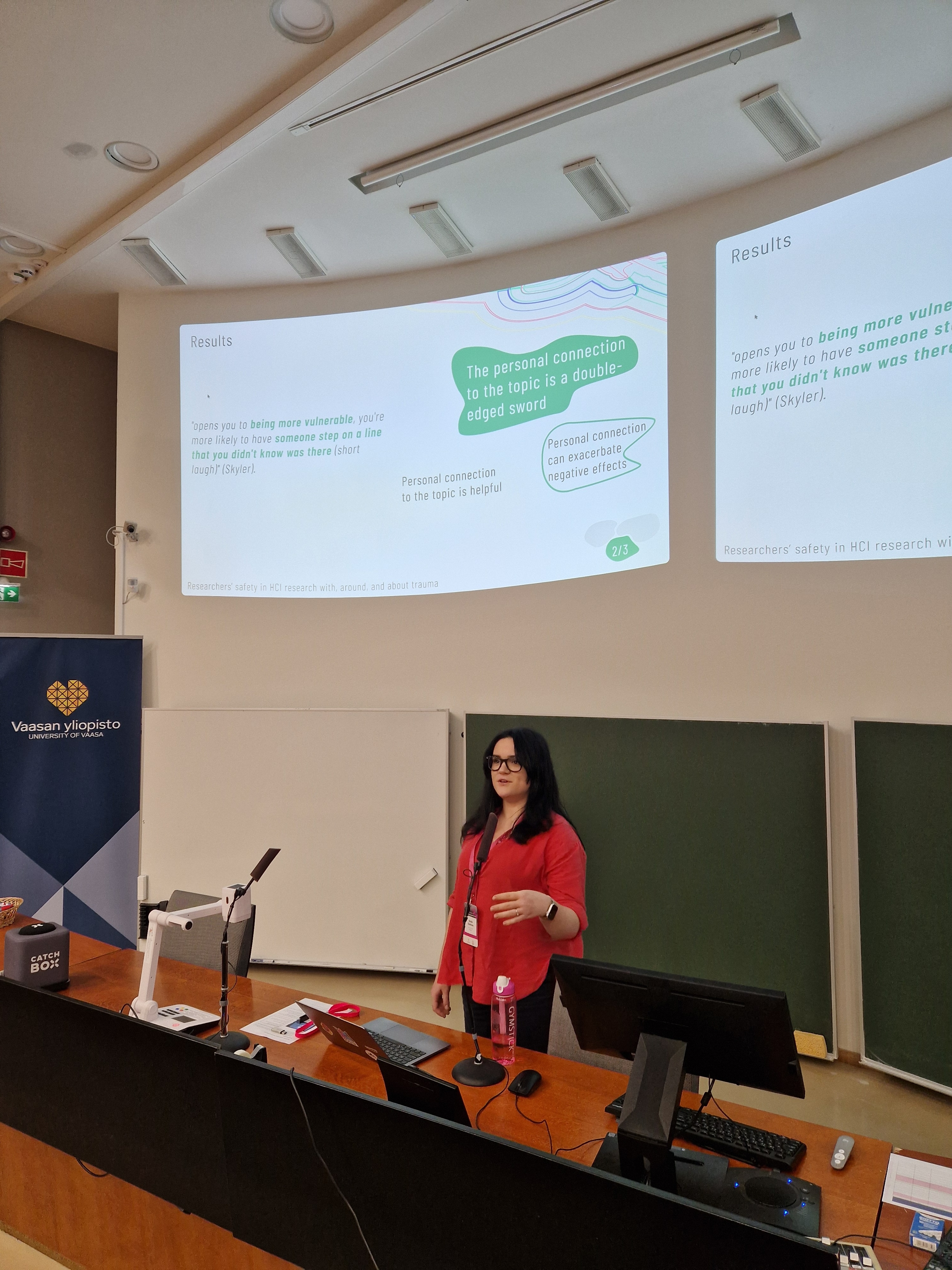
Natalia Obukhova Presents Paper at NordiCHI 2026
Natalia Obukhova presented a paper on researchers' safety when doing research with, around, and about trauma: "Maybe it's a very normal thing that we often forget about our own mental health": Researchers' safety in HCI research with, around, and about trauma
-
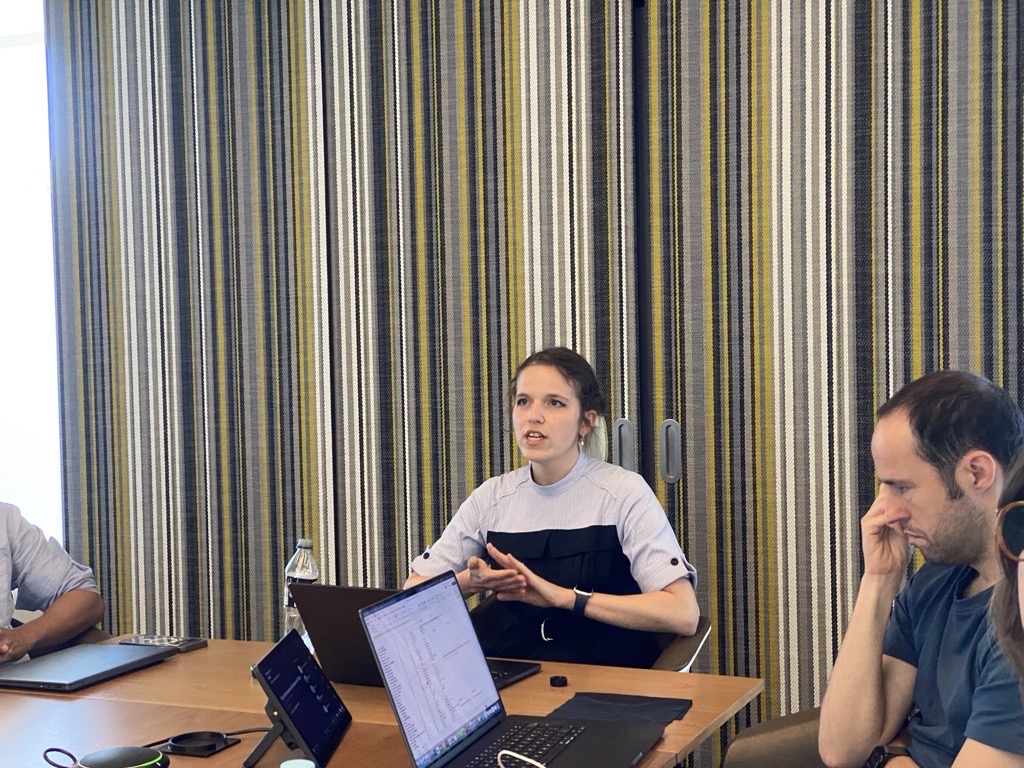
Clara-Maria Barth Invited Talk at Fraunhofer Portugal AICOS
Clara-Maria Barth recently visited the Fraunhofer Portugal AICOS, working with Francisco Nunes.
She was invited to give a talk at the Human-Centered Design Group on technological developments for individuals with type 1 diabetes, focusing on predictive systems and the limitations of current hybrid closed-loop systems, such as their inability to account for the menstrual cycle.
-
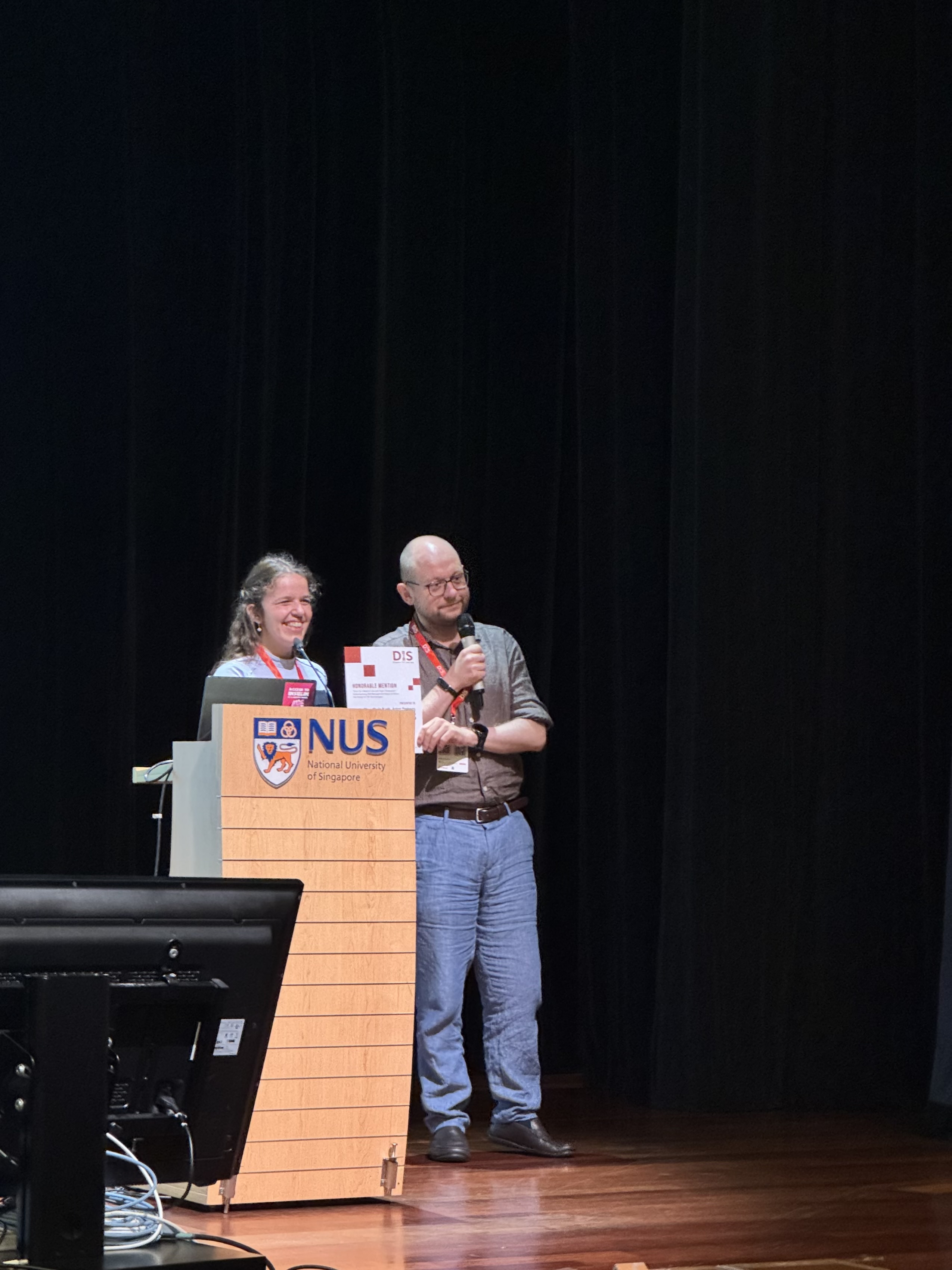
Clara-Maria Barth Presents Paper at DIS
Honorable Mention award at DIS 2026 for the work on type 1 diabetes (T1D) self-management styles. Clara-Maria Barth presents her paper ""How do I want to live with T1D": Understanding Self-Management Styles to Inform the Design of T1D Technologies", co-authored with Anton Fedosov, Chat Wacharamanotham, Jürgen Bernard, and Elaine M. Huang. This work questions the still very clinical and numbers-focused framing of current T1D technology design and proposes self-management styles as a multidimensional and non-static way of describing how individuals understand everyday life with T1D, make decisions, and define what "good" self-management means to them
-
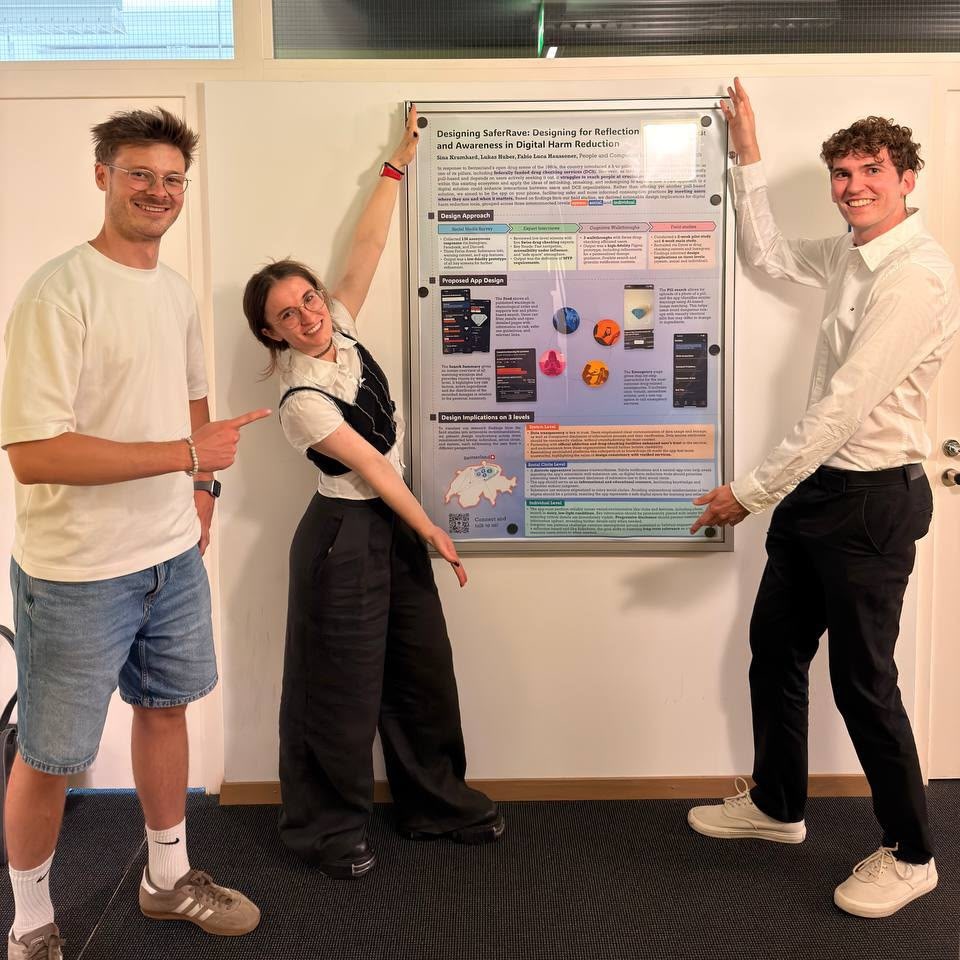
Master’s Project Accepted to the DIS 2026 Student Research Competition
Three MSc students, Sina Krumhard, Fabio Luca Haussener, and Lukas Huber, supervised by Nimra Ahmed, presented their master's project "SaferRave - Designing for Reflection and Awareness in Recreational Substance Use" as a poster at the Student Research Competition at the ACM Designing Interactive Systems (DIS) Conference 2026. The project explores how digital technologies can improve access to reliable information and support from drug checking services. The authors designed, developed, and evaluated an educational mobile application that offers anonymous, low-threshold access to trustworthy information for people who use recreational substances. This work contributes to Human-Computer Interaction (HCI) research by demonstrating how digital interventions can support harm reduction through accessible, trustworthy, and human-centered design.