People and Computing Lab
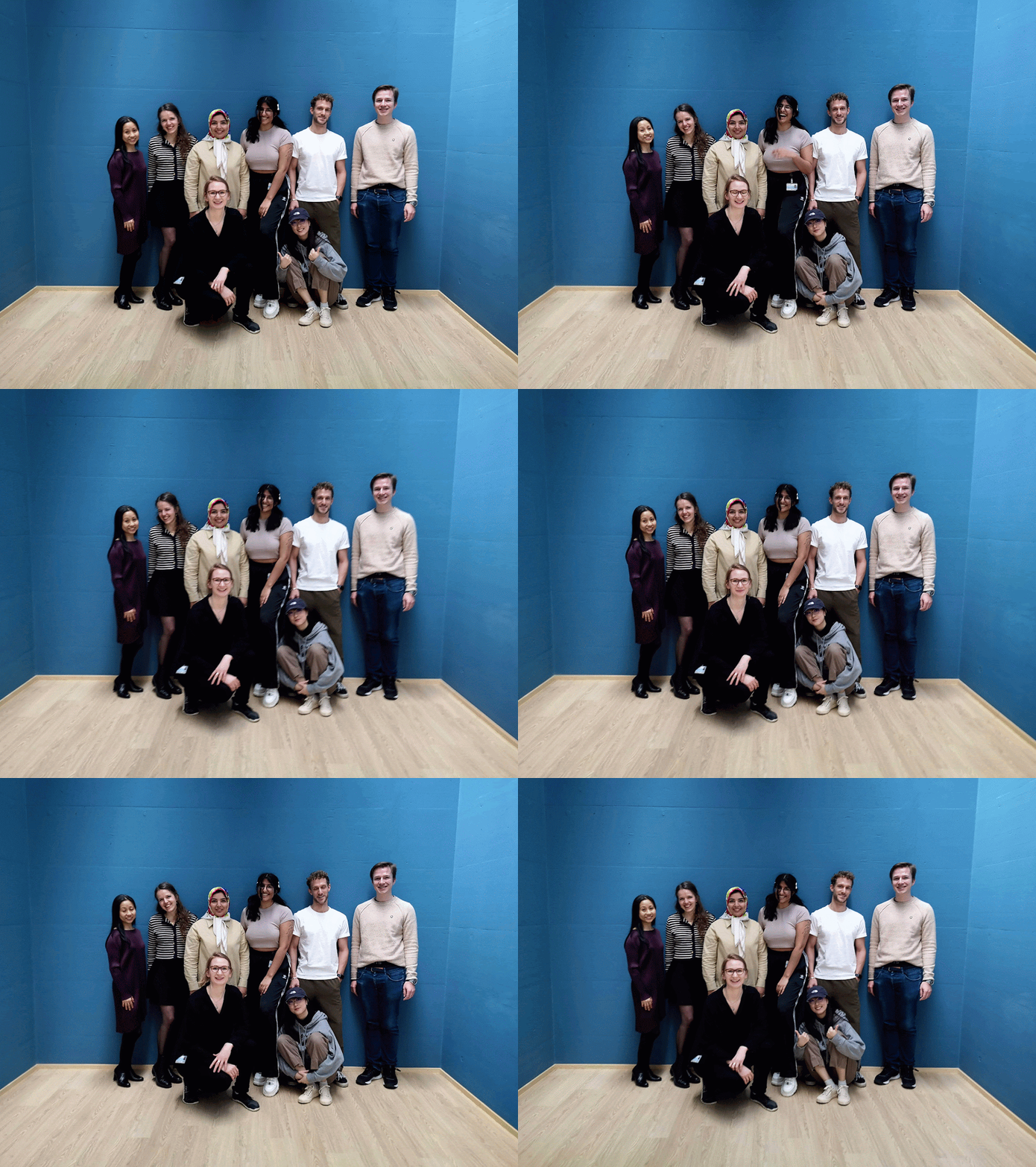
Welcome to ZPAC!

The Human-Computer Interaction group at the University of Zurich.
Mission
We strive to design great experiences with computing and create technologies that benefit people in everyday life. To do so, we take an approach to research that goes beyond interface design and usability. We focus on gaining a deep, contextualized understanding of the relationship between people and computing technologies from which to draw insight.
Research
In our research, we apply approaches drawn from a variety of fields, with a focus on qualitative methods such as interviews for data collection or affinity diagramming for data analysis. Building upon a thorough understanding of a problem space, we iteratively develop designs and systems that offer people new interactive experiences.
Currently, we are working in areas such asstorytelling for ML and AI education, digital health personalization, Social and Design Justice in the context of Gender-Based Violence sensing technologies in prenatal care and designing at the intersection of culture and mental health.
Teaching
We take a hands-on approach to learning that is reflected in our teaching. Our courses are highly interactive in nature and incorporate projects, discussion, and in-class activities to give students the opportunity to put knowledge and skills to use.
Additional Information
ZPAC News
-
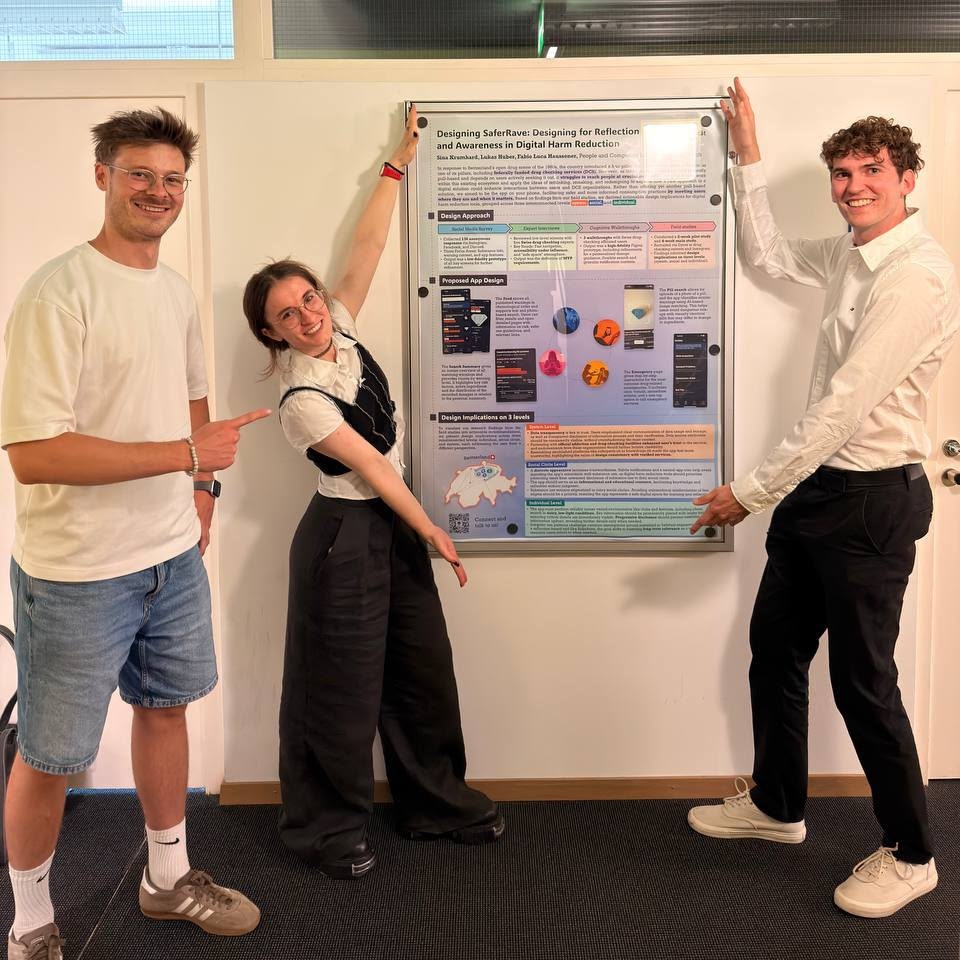
Master’s Project Accepted to the DIS 2026 Student Research Competition
Three MSc students, Sina Krumhard, Fabio Luca Haussener, and Lukas Huber, supervised by Nimra Ahmed, presented their master's project "SaferRave - Designing for Reflection and Awareness in Recreational Substance Use" as a poster at the Student Research Competition at the ACM Designing Interactive Systems (DIS) Conference 2026. The project explores how digital technologies can improve access to reliable information and support from drug checking services. The authors designed, developed, and evaluated an educational mobile application that offers anonymous, low-threshold access to trustworthy information for people who use recreational substances. This work contributes to Human-Computer Interaction (HCI) research by demonstrating how digital interventions can support harm reduction through accessible, trustworthy, and human-centered design.
-
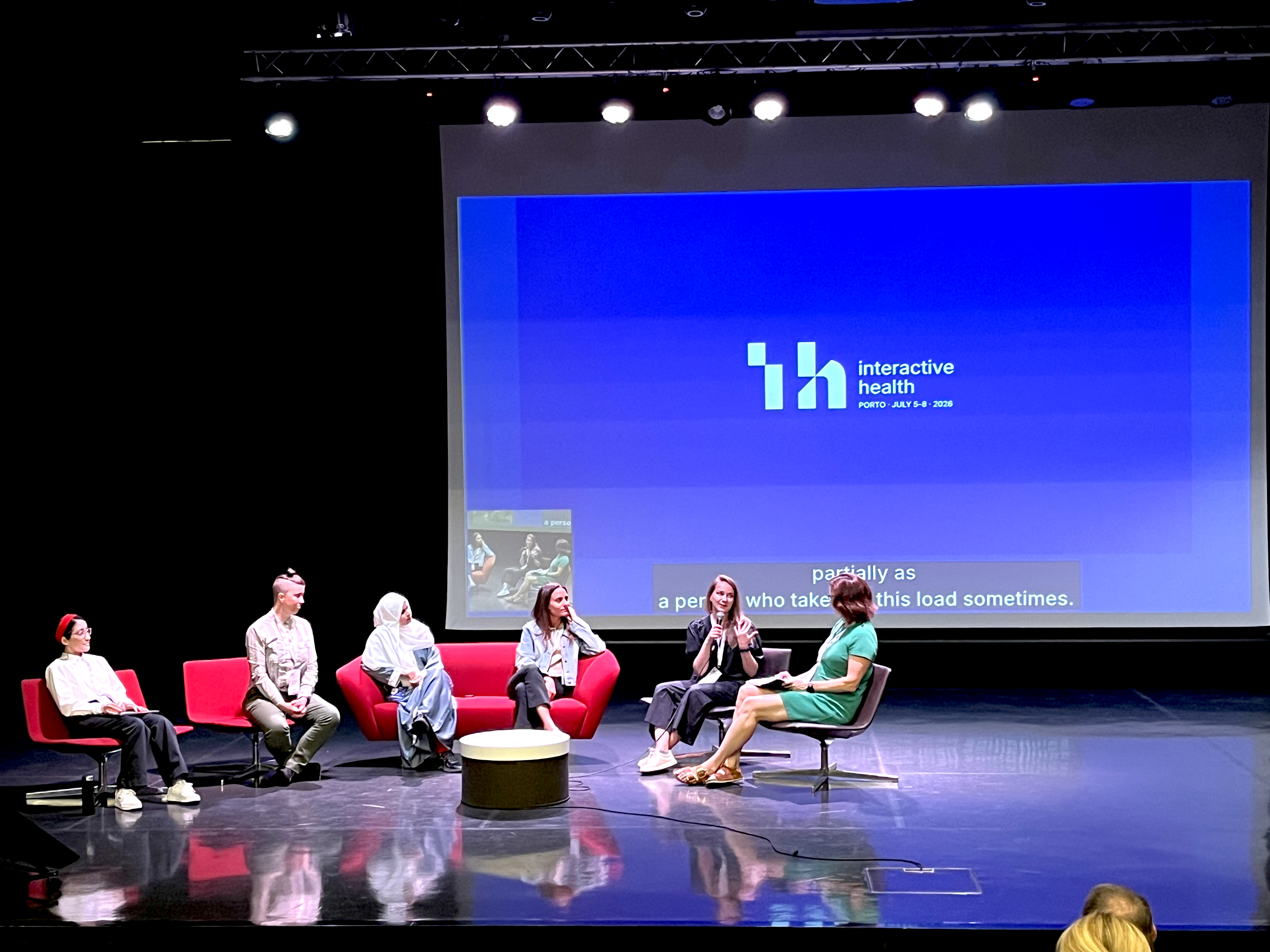
Ksenia Beloturkina Presents at ACM Interactive Health
Ksenia Beloturkina presented her related contributions paper: "What to Expect When You're Self-Tracking: Lived Experiences of Expectant Individuals and Perspectives of Care Providers on Pregnancy Data Practices."at theACM Interactive Health Conference in Porto. The work explores how expectant individuals and care providers make sense of pregnancy self-tracking data and what these perspectives mean for designing technologies that support (not complicate) pregnancy. As part of the People with Uteruses session, the presenters engaged in a panel discussion of all the papers at the end. The panel included various researchers studying women's health, reproductive health, and lived experiences (Adrienne Pichon, Sara Moin, Mara Ulloa, Maria Lua Nunes) and was moderated by Katie Siek.
-
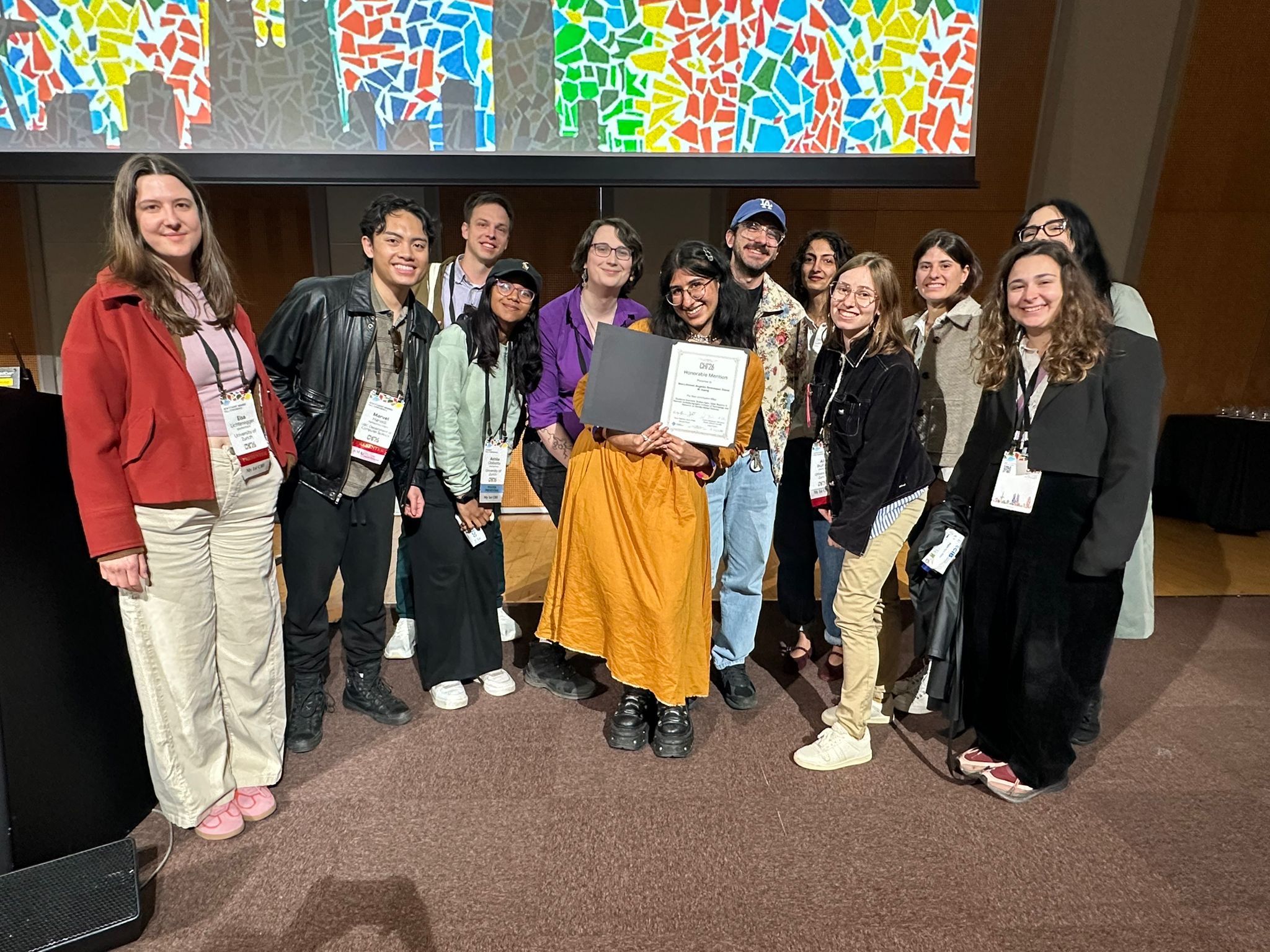
Nimra Presents 3 Papers at ACM CHI26
At CHI 2026, Nimra Ahmed presented three papers exploring the intersections of technology, social justice, and gender-based violence (GBV). Her work examined challenges in digital help-seeking, the role of social media in recognizing GBV, and the importance of sustainable, community-led support systems for GBV. The latter, CaseCompass, received an Honorable Mention Award along with special recognition for inspirational research practices.
Nimra also co-organized a large Feminist HCI meetup, “Stitch n Bitch”, bringing together over 180 participants in a vibrant space for connection, care, and community building. -
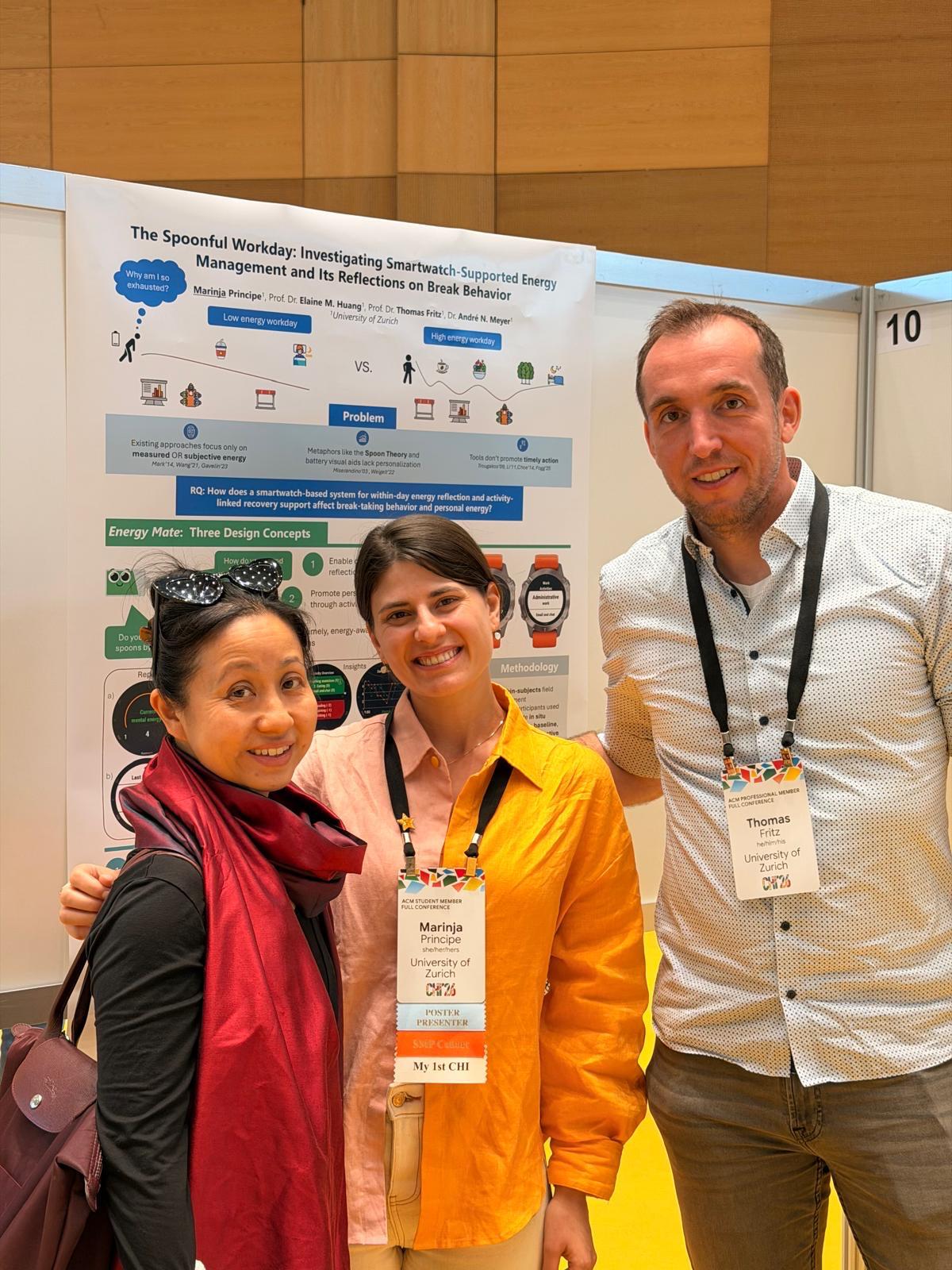
Marinja Principe Presents 2 Posters at ACM CHI 2026
Marinja Principe presents two posters at ACM CHI 2026. The first poster, “The Spoonful Workday,” explores what happens when people manage energy instead of time. Using continuous smartwatch-based reflection and small, actionable insights throughout the day, the project investigates how people can better understand and respond to their energy levels during work. This work was co-authored with Elaine M. Huang, Thomas Fritz, and André Meyer-Baron.
The second poster, “Toward a Better Buddy: A Value-Sensitive Use Case Study of an Educational AI Chatbot,” examines how educational AI chatbots embed implicit values, and why these values should be intentionally considered in the design process. Using Value-Sensitive Design, the project explores what different stakeholders want from educational chatbot systems and how those perspectives can shape their development. This work was co-authored with Tarek Alakmeh, Karolína Fílová, Selina Scherrer, and supervised by Thomas Fritz.
-
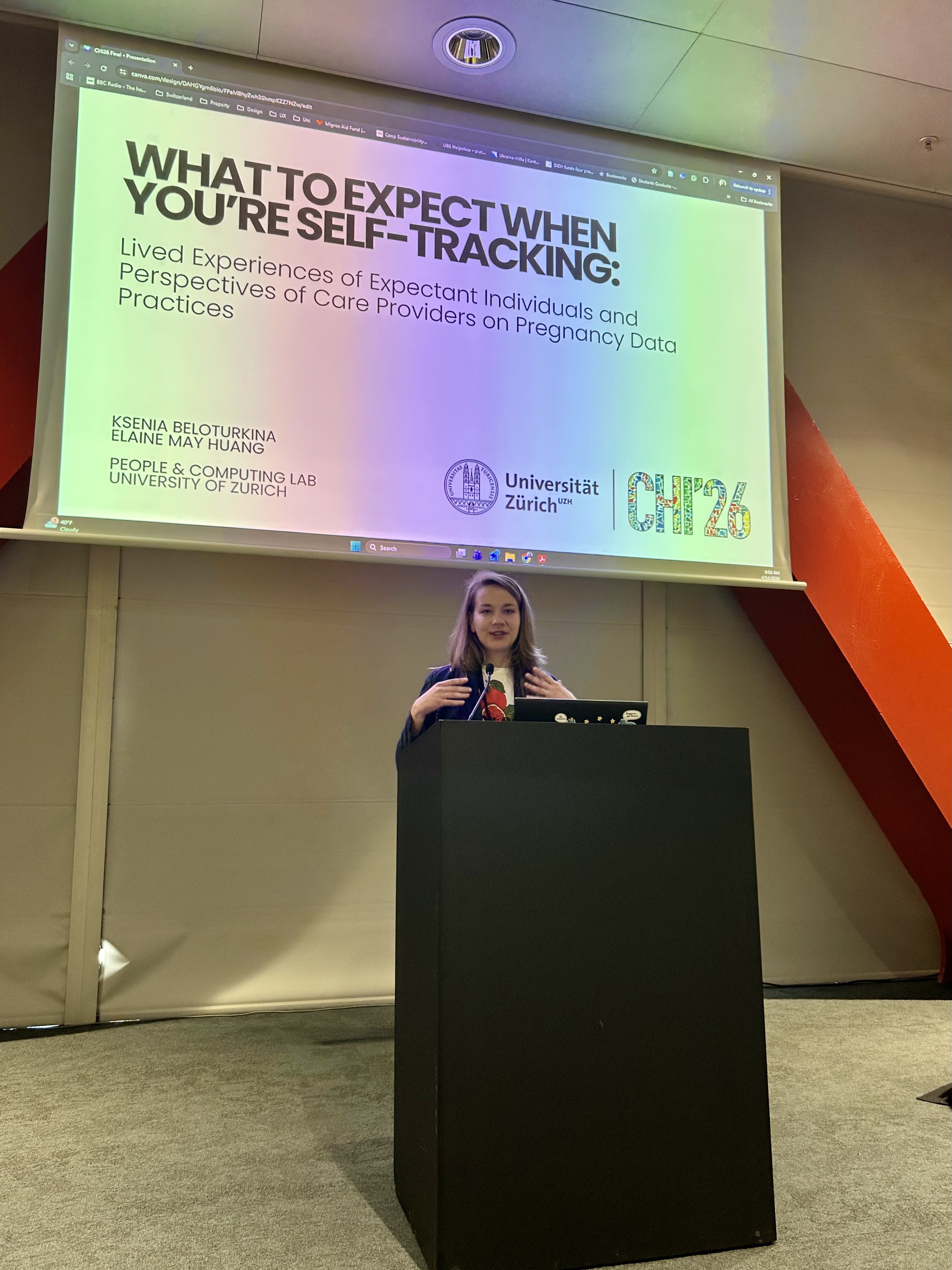
Ksenia Beloturkina Presents Paper at ACM CHI 2026
Ksenia Beloturkina presented her paper, "What to Expect When You're Self-Tracking: Lived Experiences of Expectant Individuals and Perspectives of Care Providers on Pregnancy Data Practices" (co-authored with Prof. Dr. Elaine M. Huang, University of Zurich), at the Conference on Human Factors in Computing Systems (CHI 2026) in Barcelona, Spain. The paper explores how expectant individuals engage with self-tracking during pregnancy, alongside perspectives from care providers (midwives and clinicians), highlighting the complexities of data practices in maternal health. It also offers insights into how these practices shape experiences and expectations around pregnancy data.