From Autonomous Drones to Digital Privacy: IfI at Scientifica 2026
From autonomous racing drones to the invisible data shared by our everyday devices, researchers from the Department of Informatics brought computer science research closer to the public at Scientifica 2026. Held from 22 to 30 August across Zurich and Dübendorf, Scientifica 2026 brought researchers and the public together to explore current science first-hand. IfI contributed with exhibitions, live demonstrations and talks.
Pushing autonomous flight to the limit
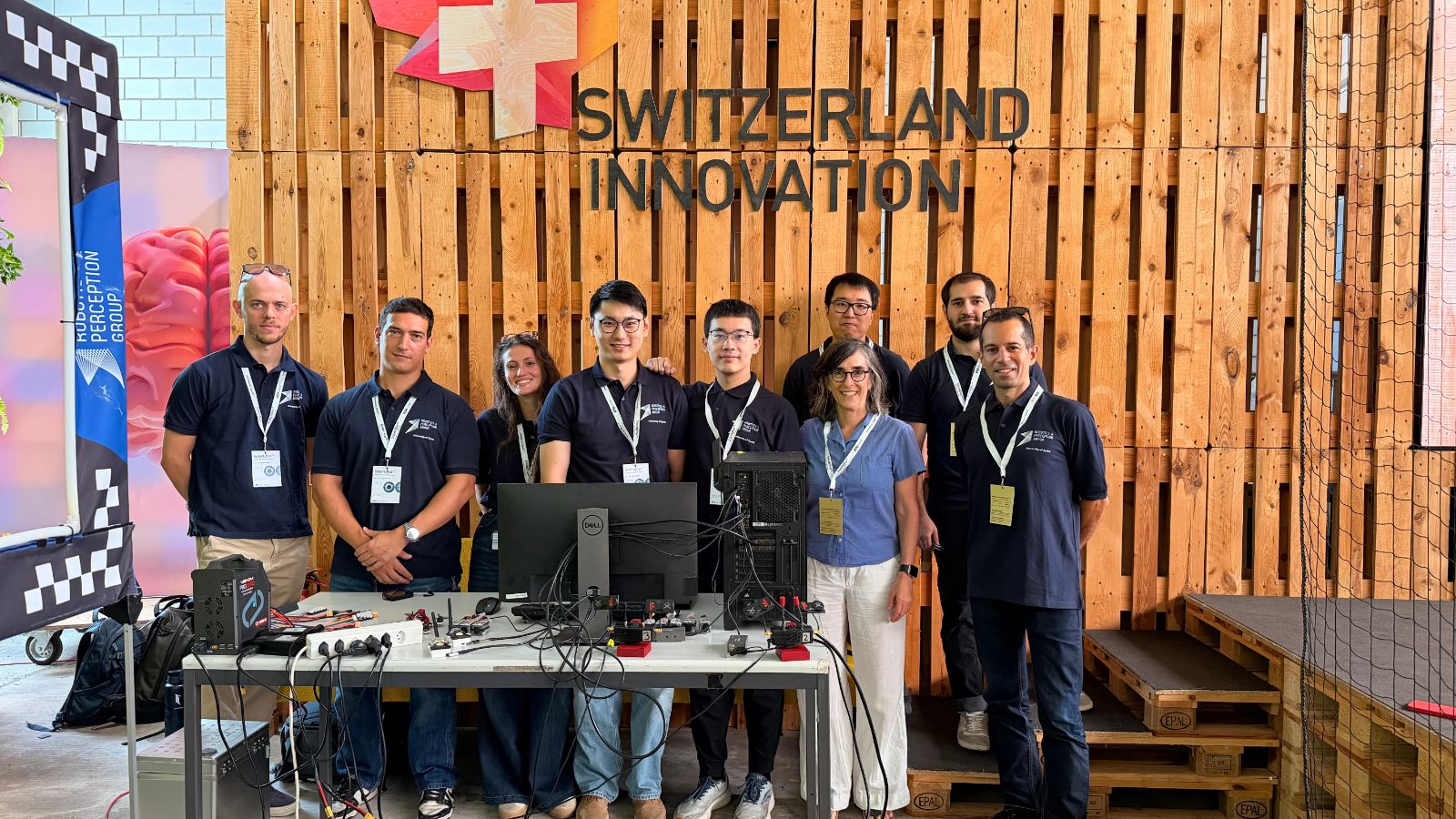
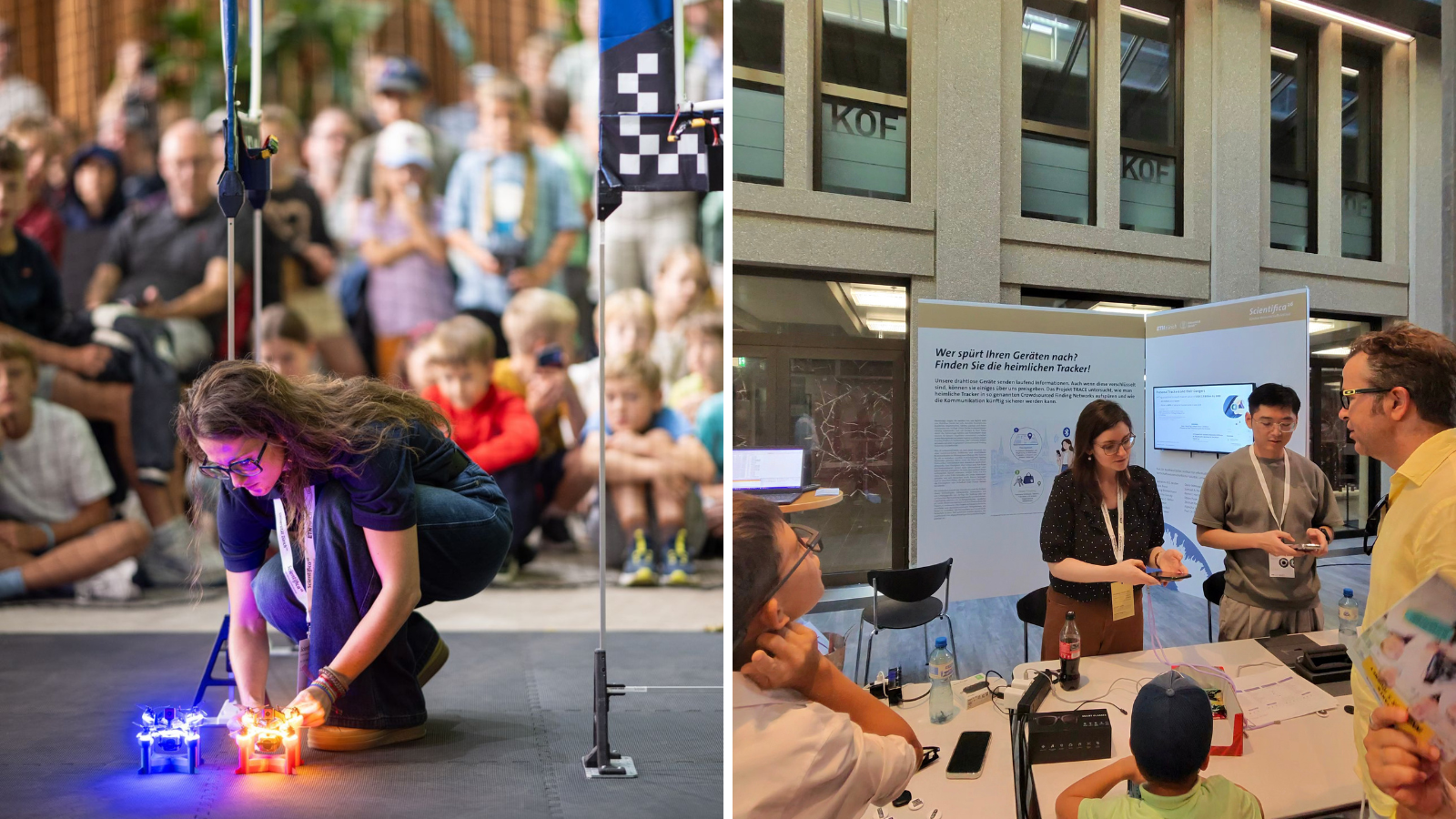
How fast can a drone fly when it has to perceive its surroundings and make decisions entirely on its own? At the Zurich Innovation Park in Dübendorf, the Robotics and Perception Group led by Prof. Davide Scaramuzza gave visitors a close-up look at its research on autonomous flight.
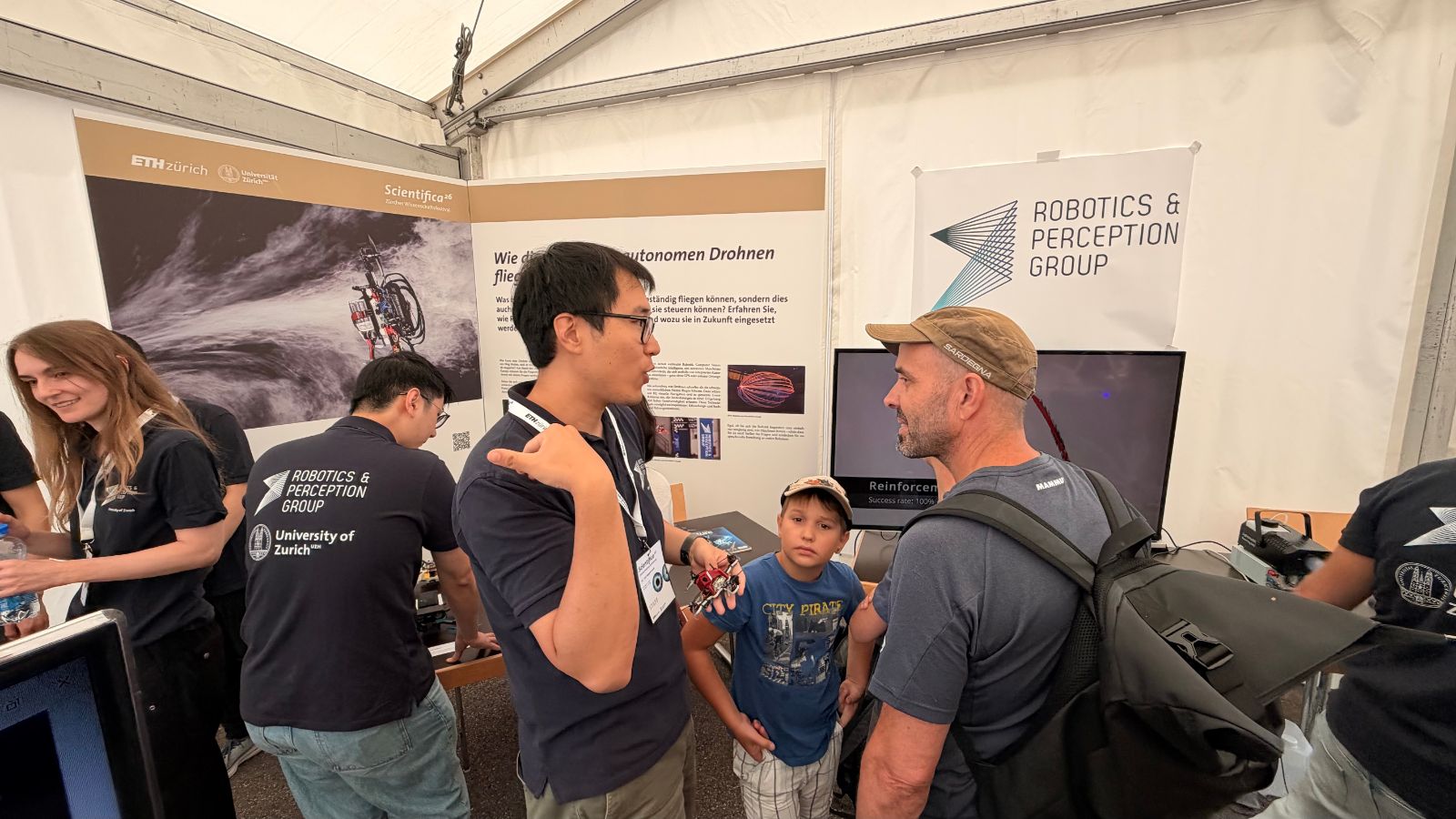
At the exhibition "How the Fastest Autonomous Drones Learn to Fly", visitors could discover how autonomous drones learn to see, react and navigate at high speeds, meet the flying robots up close and talk to the researchers behind the technology.
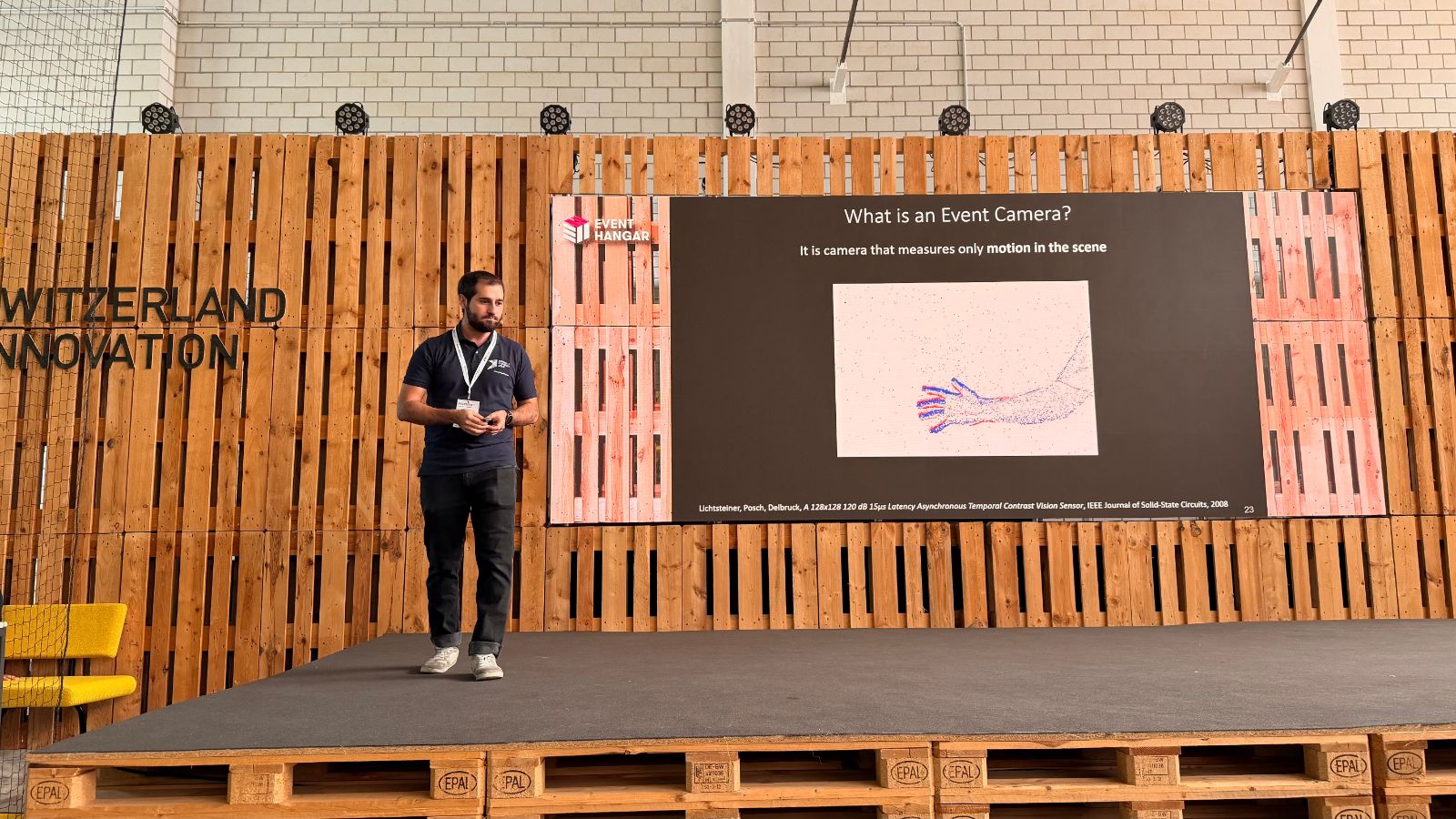
The research also took to the air: during several live shows, the group demonstrated autonomous racing drones capable of flying faster than drones piloted by humans.
Making invisible data visible
What can the devices around us reveal without sharing personal data in the traditional sense? Researchers from the Communication Systems Group explored this question at Scientifica through the TRACE project, raising awareness of the privacy implications of metadata.
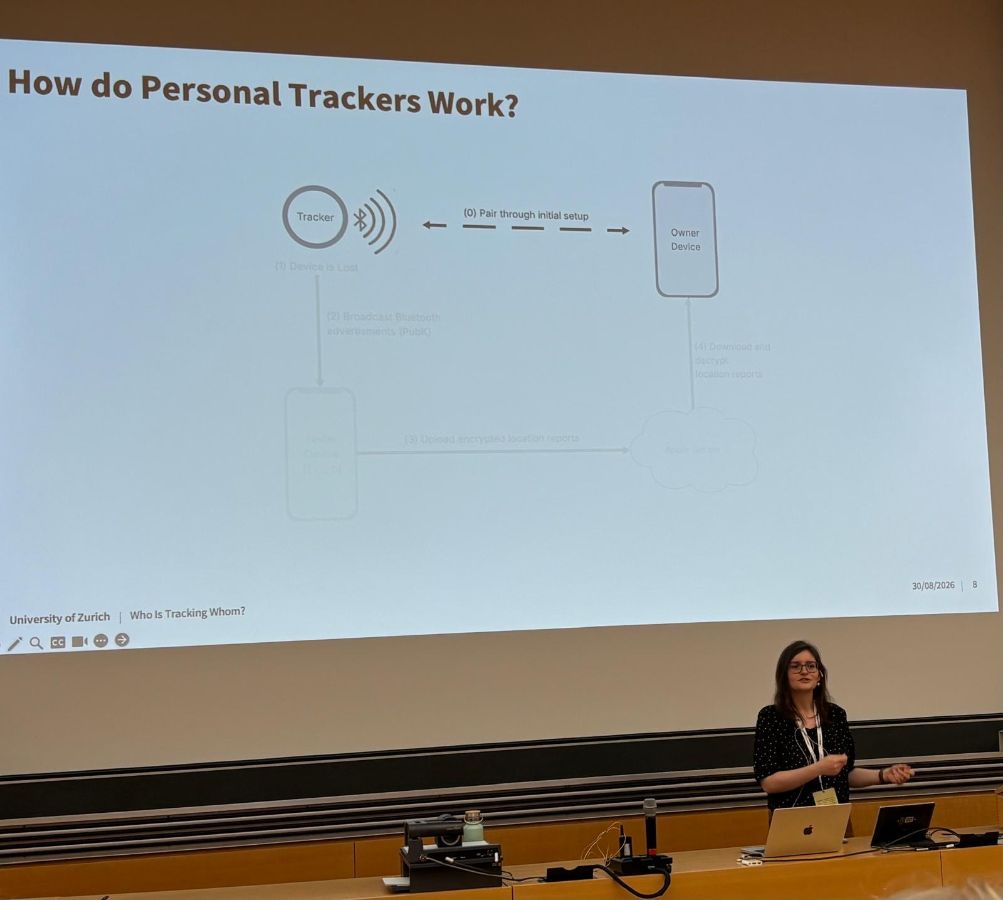
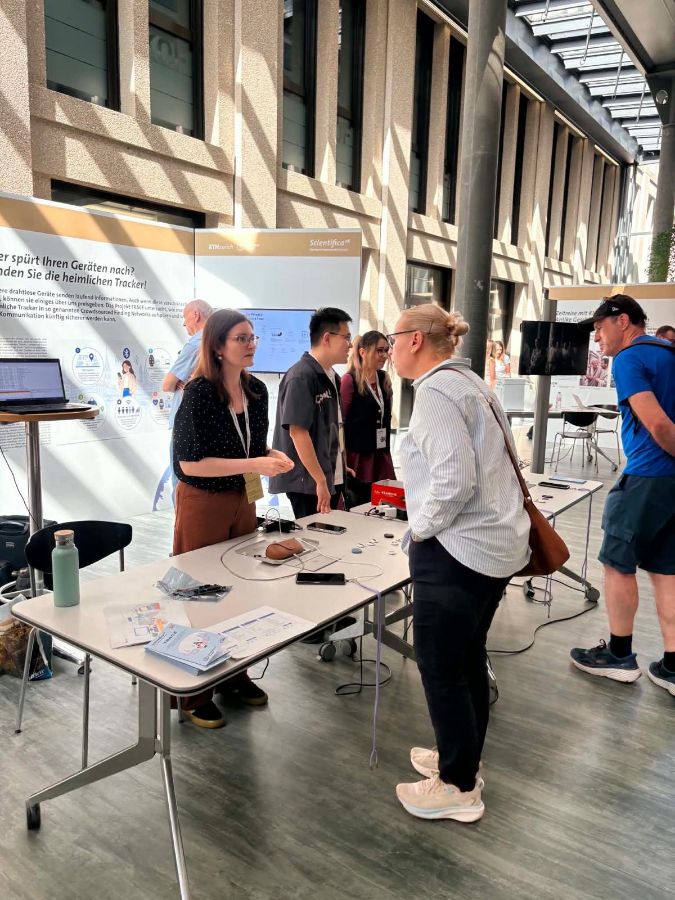
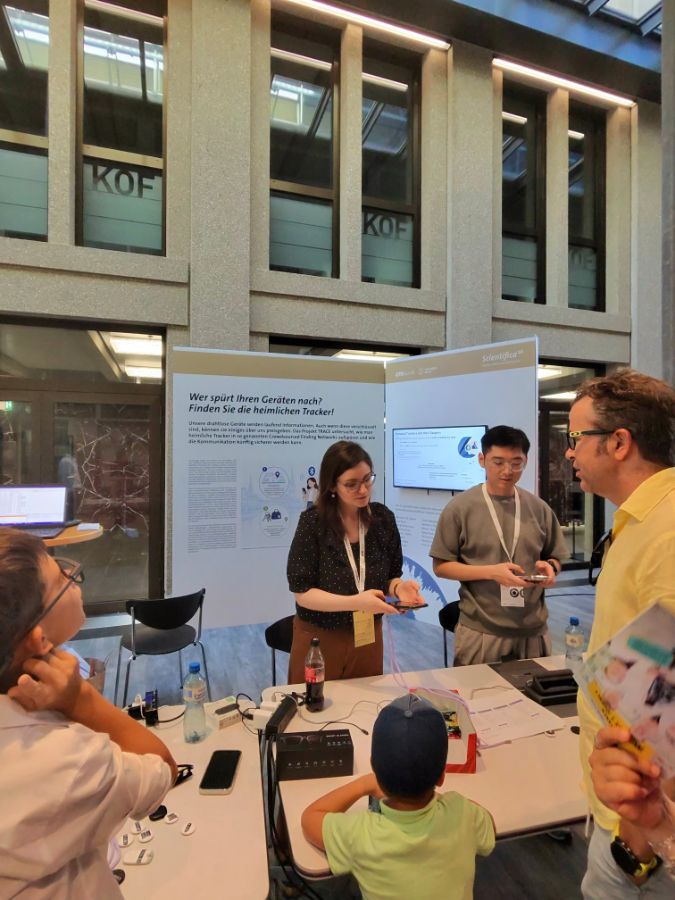
In a short lecture, Katharina Müller introduced visitors to the topic and showed how much information can be inferred from metadata, even when it does not contain personal data in the traditional sense. At the accompanying booth, Katharina Müller and colleagues from the Communication Systems Group brought the topic to life through an interactive demonstration.
Using a live app, visitors could see in real time what can be inferred from nearby Bluetooth devices - including what type of devices they are, where they are located and, depending on their behaviour, whether they could potentially be used for stalking.
The team also presented three different smart glasses as an example of what they see as the next frontier in digital privacy. As cameras become increasingly unobtrusive, the devices prompted conversations about how easily people can be recorded withouth noticing, what happens to these recordings and how they may be used.
The booth welcomed visitors of different ages and sparked lively discussions about the invisible data our devices constantly share with their surroundings, as well as the privacy questions emerging from new and increasingly unobtrusive technologies.
Bringing research into conversation
Scientifica gave IfI researchers the opportunity to take their work beyond the university and engage directly with the public. Whether watching autonomous drones in action or uncovering the digital traces left by everday devices, visitors could experience current informatics research first-hand and discuss the opportunities and challenges that come with emerging technologies.